
Dynamics 365 Finance & Operations implementation project focused on financial processes and integration with operations. Scope: requirements gathering, functional design, parameterization, and validation through test cycles (SIT/UAT), ensuring data consistency, reporting, and regulatory compliance.

Scope

Implementation of key financial modules (GL, AP/AR, banking/treasury, taxes, fixed assets, budgets) and their interaction with purchasing/inventory/sales where applicable.

Deliverables

Requirements, functional design by process, configuration, test scenarios, and acceptance criteria, with a focus on standards, efficiency, and maintainability.

Validation and adoption

Key user testing, iterative adjustments, training, and start-up support for stabilization and correct use in daily operations.

Key modules implemented

This project deployed the main financial modules of Dynamics 365 Finance & Operations, covering everything from core accounting to treasury and processes connected to operations. The implementation focused on leaving a consistent data and process model to support closing, control, compliance, and reporting.

Accounting and control

General ledger
Consolidation
Budget
Management reports

Financial cycle and treasury

Accounts payable
Accounts receivable
Cash and bank management
Credits and collections
Expense management

Connected operations

Fixed assets
Taxes
Inventory management
Procurement and supply
Sales and marketing

Each module was configured taking into account dependencies between processes and control requirements (dimensions/analytics, traceability, and reporting) to avoid functional “islands” and ensure end-to-end consistency.
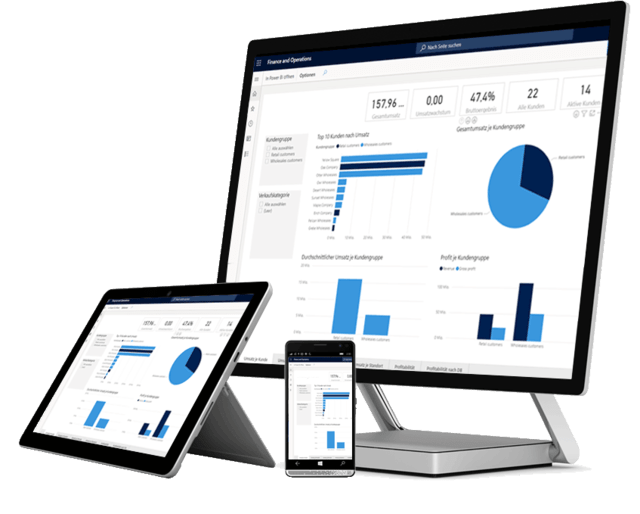
Deliverables and responsibilities

Participation in implementation covered the analysis, design, configuration, and validation phases, focusing on financial processes and their adoption by the business. Deliverables were organized to ensure traceability from requirements to results and to facilitate testing, training, and stabilization.

dynamics 365 finance and operations
Requirements gathering and process mapping to functional design.
Functional design by areas/processes, including scenarios and business rules.
Parameterization and configuration settings for local and global requirements.
Definition of test scenarios, execution support, and incident resolution.
Coordination with Finance, Operations, and IT to align processes and dependencies.
Ensuring regulatory compliance and defining efficient operational flows.
Training, change management, and post-go-live support for stabilization.

Consulting approach

Prioritize standardization and maintainability.

Minimize rework through early validation with users.

Control of changes and data consistency between modules.

Operating result

Traceable and consistent financial processes.

Less friction in recurring tasks (closing, payments, reconciliation, reporting).

Database prepared for management reports.

Work methodology

Implementation is organized in phases to ensure traceability, change control, and business validation, from requirements gathering to post-launch stabilization.


1. Discovery and scope

Identification of requirements, critical processes, and dependencies; definition of functional scope, main risks, and initial work plan.


2. Functional design

To-be modeling, business rules, and controls; definition of scenarios, acceptance criteria, and functional documentation by module.


3. Basic configuration

Standard parameterization by modules; configuration of dimensions, journals, profiles, and accounting structures, plus roles, to ensure operational consistency.


4. Integration and data

Preparation of master data and balances; validation of necessary integrations, mappings, and data quality prior to testing.


5. Testing and UAT

Execution of SIT and UAT tests with users; incident logging, iterative adjustments, and final process validation.


6. Go-live and support (hypercare)

Training and operational guides; start-up support, hypercare support, stabilization, go-live monitoring, and controlled transition to regular support.

How I add value

In financial implementations of D365 Finance & Operations, the value lies in a consistent, usable solution that is ready for closing and reporting.

· Control and traceability: Consistent processes and configuration to ensure traceability and a reliable basis for reporting and auditing.
· Compliance and consistency: Regulatory alignment and internal control, prioritizing standards and maintainability to reduce complexity and rework.
· Adoption and stable operation: Validation with users (SIT/UAT), training, and start-up support to quickly stabilize operations.

valor

LET’S WORK TOGETHER

If you are planning to implement, optimize, or upgrade Dynamics 365 Finance & Operations, I can help you define the scope, translate requirements into functional design, configure and validate processes with the business (SIT/UAT), and accompany the start-up to ensure stable operation and a consistent database for closing and reporting.

¿